
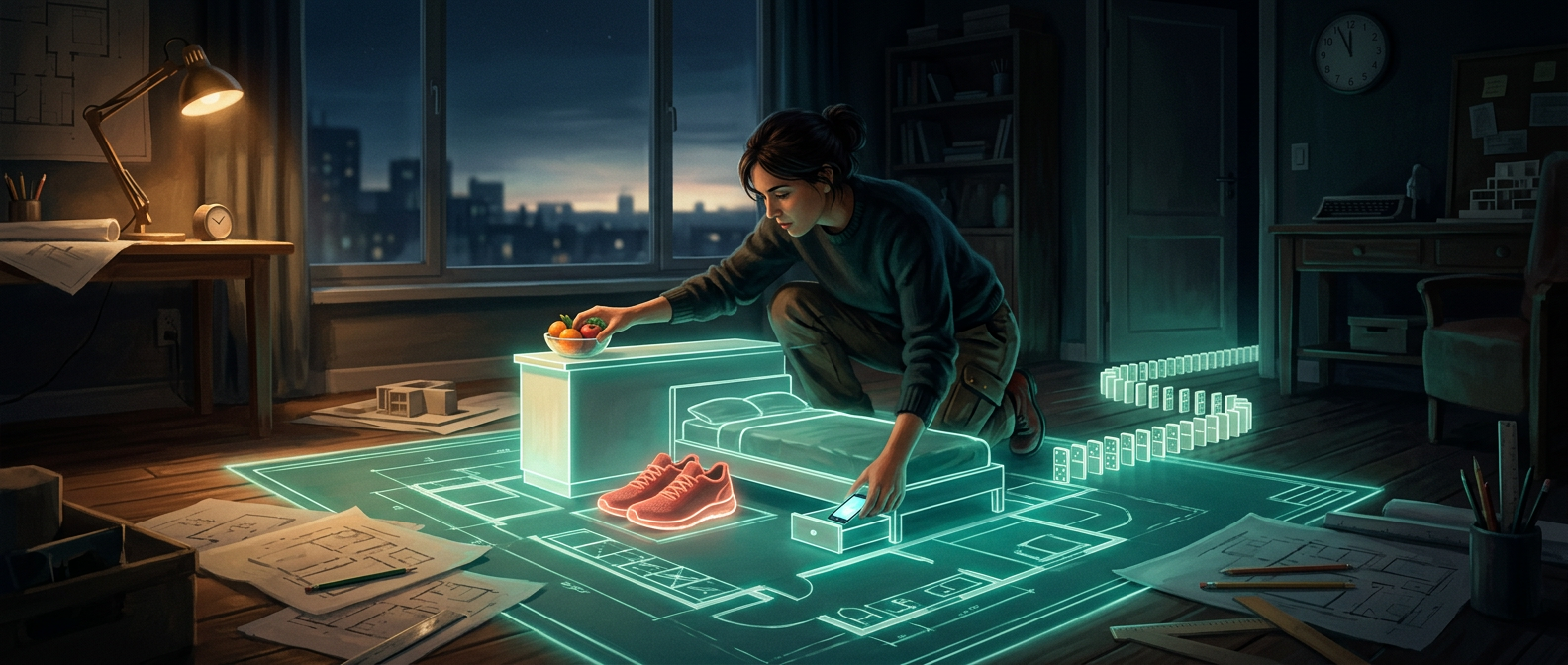
Willpower is a strategy for people who haven’t built a system yet. The system is what people with willpower appear to have.

Here’s a number that should make you pause: about 43 percent of what you do each day is habit, not decision. Nearly half of your tomorrow is already decided, not by how motivated you’ll feel when you wake up, but by the little details already sitting in your environment. The fruit bowl on your counter. The shoes by your door. The phone next to your bed.
Most of us never touch those details. We just promise ourselves we’ll try harder. And that’s the whole problem.
Why “trying harder” keeps failing
Willpower works through the thinking part of your brain. Habits run through a different, older pathway, the part that doesn’t need your mood to cooperate. That’s why habits keep going on days when you’re tired, stressed, or just don’t feel like it. They don’t ask for permission.
The old idea was that willpower is like a battery, something you drain and refill. Big studies have since questioned that. But the practical point still stands: anything that depends on your willpower is fragile, because your willpower depends on a state you can’t always guarantee. Some mornings you’ll have it. Some mornings you won’t. And the habit that rests on it collapses on the wrong morning.
The two runners
Two people both want to run every morning. Same goal. Similar motivation.
Person A decides to run at 6 a.m. and relies on willpower each morning to beat the warmth of the bed. The first week, they run twice. The second week, once. By the third week, they’ve stopped.
Person B lays out their clothes and shoes the night before, right at the foot of the bed. They even sleep in their running shorts. They run five times the first week, six the second, and they’re still running a year later.
What’s the difference? Not discipline. Person B simply moved the friction. They made running the easiest thing in the room to do at 6 a.m. Person A, meanwhile, had to fight a warm bed with nothing but a promise.
The lesson isn’t that Person B is stronger. It’s that Person B designed a situation where strength wasn’t even needed.

Why defaults rule your life
This shows up everywhere, at a huge scale. In countries where organ donation is the default, almost everyone stays opted in. In countries where it isn’t, almost everyone stays out. People don’t choose. They just go with whatever was already picked for them.

The same force runs your daily life. Whatever is easiest, whatever is already there, whatever happens without you having to decide, that’s what you’ll do. Not because you’re weak. Because your brain conserves energy by following the path of least resistance.
So the smart move isn’t to fight this. It’s to use it. Design your defaults before you need them. Put the fruit where you can see it and the snacks somewhere annoying. Set the app up in advance. Make the right choice the one that takes zero effort.

There’s a quiet bonus too. A system removes the daily argument with yourself, the “should I or shouldn’t I” that eats up your mental energy. When the decision is already made, you save that energy for things that actually deserve it.

The paradox most people miss
Building a system feels like extra work up front, so most people skip it. That’s the trap. The cost of not building it is paid every single day, forever, in small failed mornings and quiet guilt.
One hour of setup tonight saves you the fight tomorrow, and the next day, and every day after. Discipline isn’t about being strong. It’s about making strength unnecessary.
So pick the one habit you keep failing at. Don’t try harder. Change the room instead. Lay out the clothes. Install the app. Remove the snack. Make the right choice the default, and willpower stops mattering altogether. Aap ko apne aap se roz ladna nahi hai — bas raat ko thoda sa intizam kar lijiye, aur subah khud-ba-khud ho jayega.

Disciplined people are not stronger. They have just stopped needing to be strong in the moments that defeated you.

Comments (0)
Leave a Reply
No comments yet. Be the first to share your thoughts!