

You spend eight focused hours answering emails, resolving unexpected vendor issues, and handling sudden requests. By the end of the day, you are physically and mentally drained—yet when you look at your primary goals, you have not moved the needle by a single millimeter.
This exhaustion is not caused by a lack of discipline. It is caused by a fundamental neurobiological glitch: your brain naturally confuses urgency with importance.
The Operational Paradox
Former U.S. President Dwight D. Eisenhower captured this tension when quoting a university president: “I have two kinds of problems, the urgent and the important. The urgent are not important, and the important are never urgent.”
Popularized by Stephen Covey in The 7 Habits of Highly Effective People, the Eisenhower Matrix categorizes all tasks into four distinct quadrants based on two independent variables: time sensitivity (urgency) and strategic value (importance).
Most professionals spend their lives operating in Quadrant 1 (reacting to immediate fires) and Quadrant 3 (servicing demands that feel urgent to someone else). Meanwhile, Quadrant 2—the leverage-building work that actually prevents future crises—quietly starves.
The Neuroscience of False Alarms
Why does the human mind prioritize the loud over the valuable?
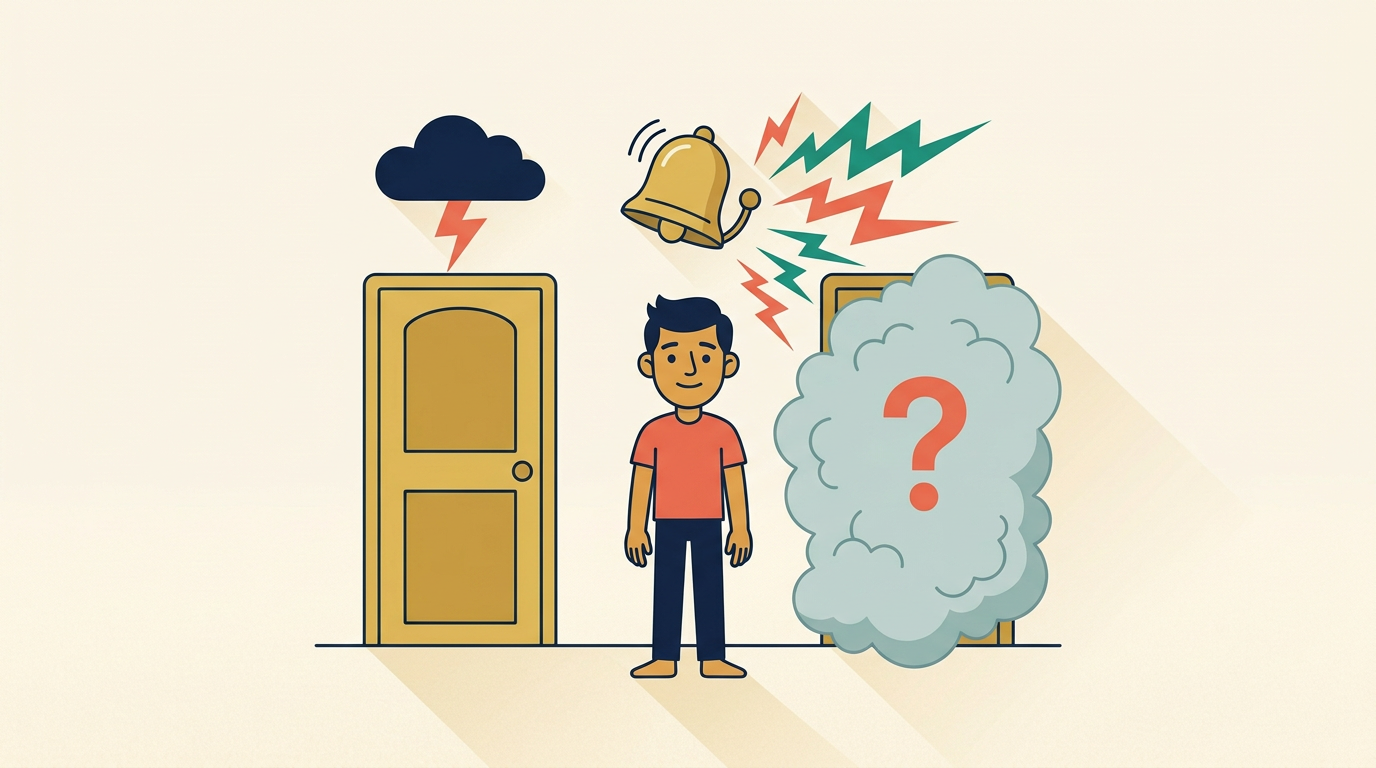
Urgency directly hijacks the brain’s salience network, an evolutionary circuit designed to alert you to immediate physical threats. When an alarm sounds, an email pops up, or a message badge appears, your endocrine system releases a micro-dose of cortisol and adrenaline. For an ancestor in the wild, a sudden rustle in the brush demanded immediate physical reaction. In a modern office, that exact threat-response mechanism triggers for a Slack ping.
This neurochemical surge makes urgent tasks feel subjectively vital, even when they are objectively trivial.

Compounding this physiological trap is what organizational researcher Sophie Leroy defines as attention residue. When you constantly jump between urgent interruptions in Quadrant 3 and high-stress tasks in Quadrant 1, cognitive debris lingers in working memory. The prefrontal cortex loses the continuous, low-arousal focus required for deep Quadrant 2 problem-solving.

The Systemic Cascade
Consider a marketing director drowning in daily operations.
On Monday, she clears 60 unread emails (Q3), resolves a sudden vendor delivery breakdown (Q1), and rushes a slide deck due the next morning (Q1). By Friday, she realizes she never touched her highest-value quarterly objective: redesigning the team’s core content workflow (Q2).

Because she never built the new content workflow, her team continues to make operational errors, generating a new wave of Quadrant 1 vendor fires the following month. Neglecting Quadrant 2 actively manufactures future Quadrant 1 crises.
To break the feedback loop, she locks two-hour windows on Tuesday and Thursday mornings exclusively for Quadrant 2 workflow architecture. She protects these blocks with the absolute non-negotiable status of a surgical procedure—no inbox checks, no Slack notifications. Within four weeks, her Quadrant 1 emergencies drop by 50% because the newly engineered system prevents the breakdowns before they occur.

Reclaiming Bandwidth
The analytical prefrontal cortex must deliberately override the salience network’s false alarms. You cannot wait for Quadrant 2 work to “feel” urgent, because by definition, it never will.
To secure your strategic focus:
- Identify One Q2 Lever: Pinpoint the single system, plan, or skill that would reduce your recurring daily friction.
- Pre-Emptive Time-Blocking: Schedule a 60-to-90-minute block for that task on your calendar before open calendar slots get filled by incoming demands.
- Treat Q2 as Non-Negotiable: Treat that time block with the same authority as an external client meeting.

Urgency is a feeling. Importance is a fact. Confuse them and you will spend your life building other people’s priorities.


Comments (0)
Leave a Reply
No comments yet. Be the first to share your thoughts!